Student researcher · AI builder · violinist

Anusha
Arora

Building human-centered technology for health, education, and music.

I turn questions about how people feel, learn, and create into independently built systems—then test whether those systems truly help.

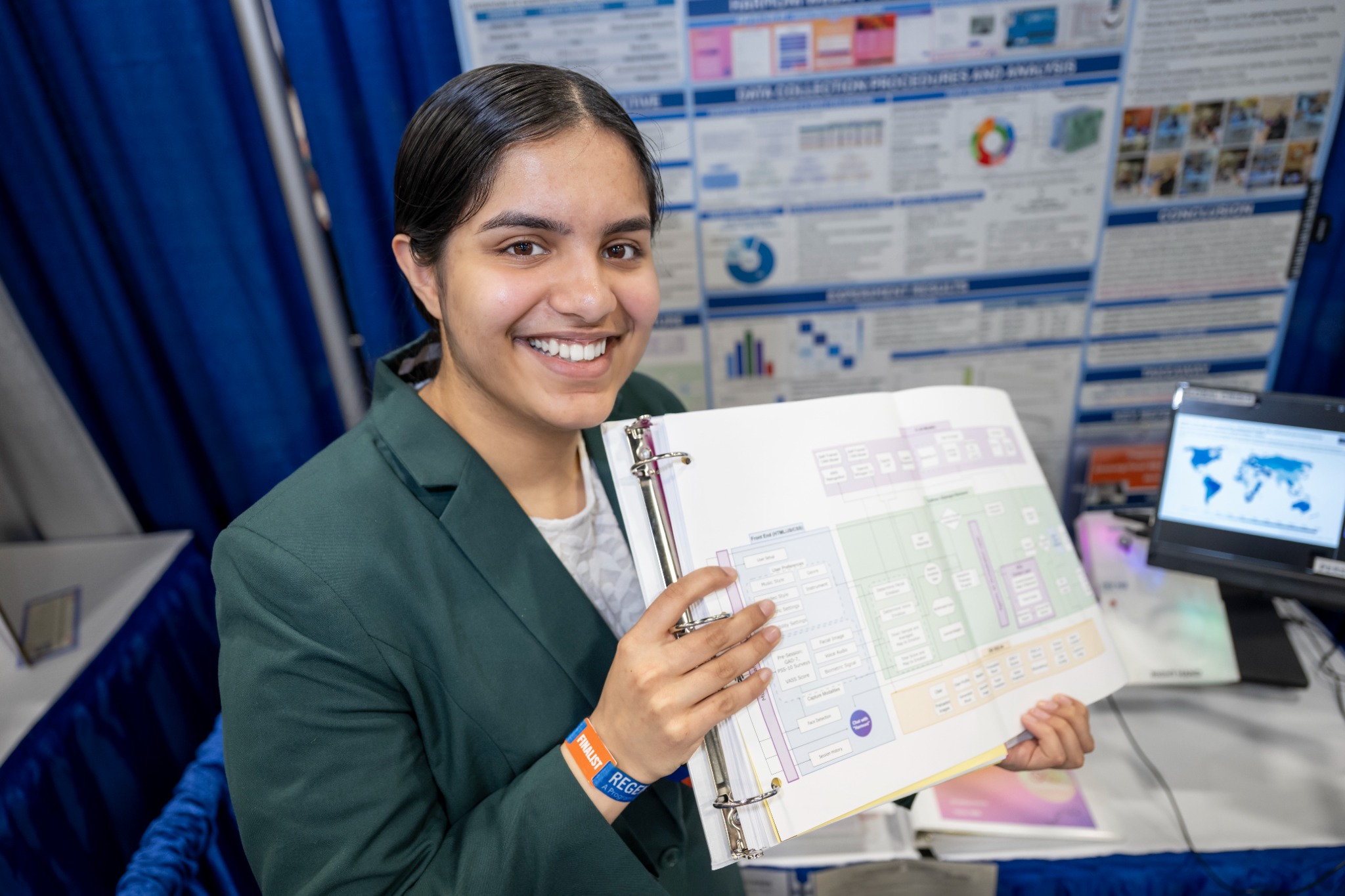
Anusha presenting HARMONI at Regeneron ISEF
HARMONI at ISEF · 2026
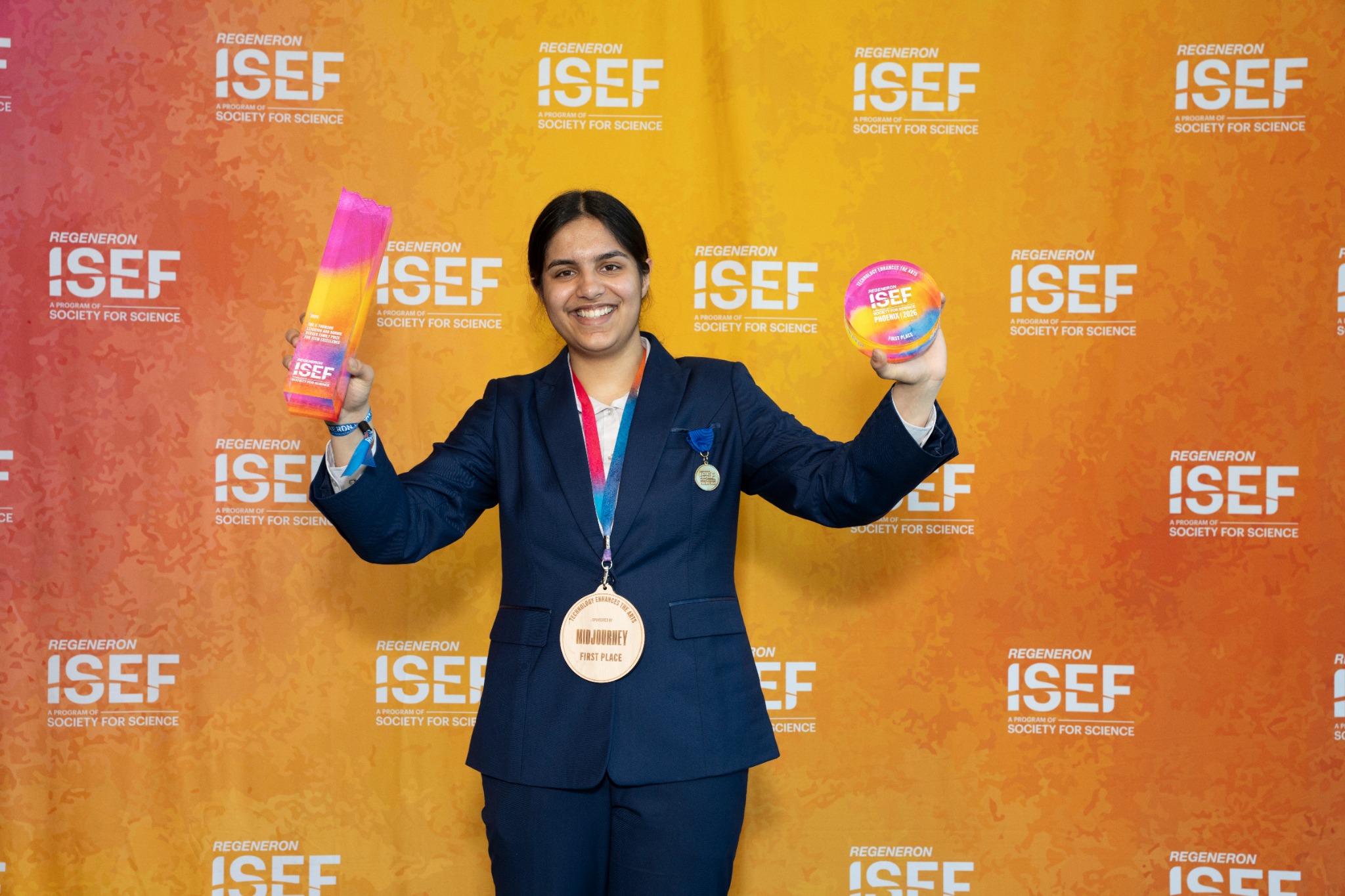
Anusha holding her Regeneron ISEF awards
Top Grand Award
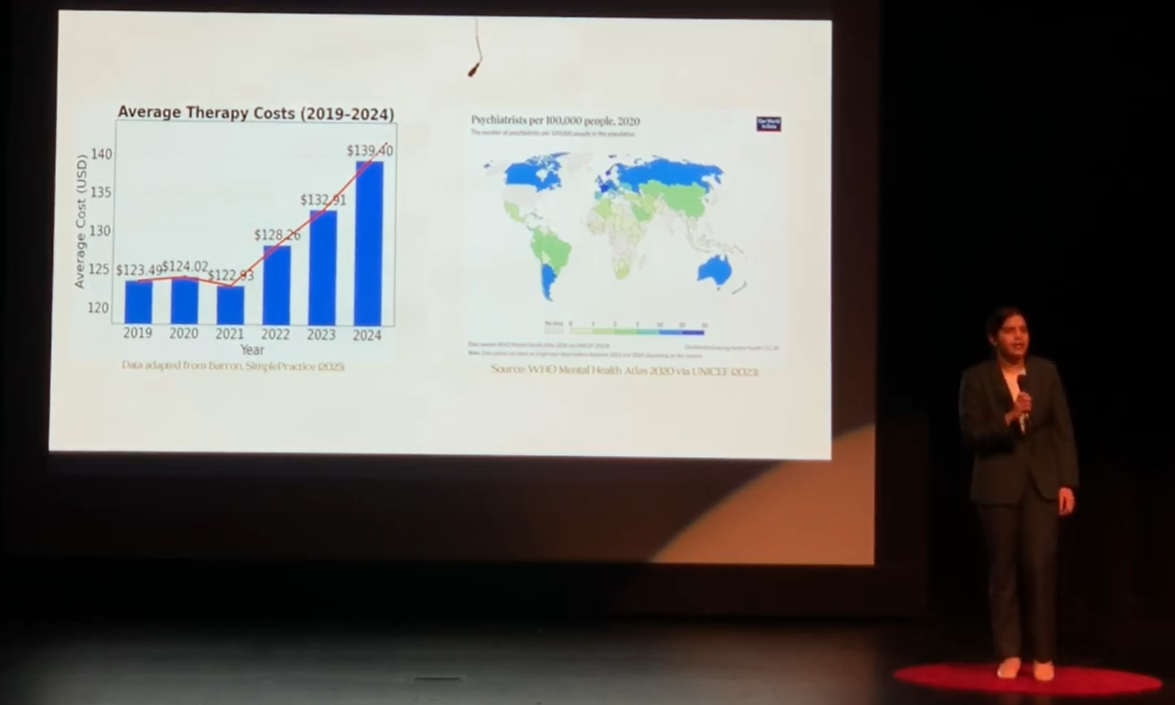
Anusha speaking on a TEDx stage
TEDx speaker
2award-winning
research systems
4controlled
experiments
108HARMONI study
participants
2IEEE
publications

01 / Featured work

From a question to a working system.

I’m most energized when software and hardware leave the notebook and begin helping a real person.

01
AI + mental health

HARMONI

Harmonically Adaptive Real-Time Multimodal Output for Neural Integration

A portable platform that combines facial, vocal, and physiological signals to estimate emotional state, then creates personalized music and visuals for stress and anxiety support.

Independently built

I conceived, designed, programmed, integrated, and tested the entire system—including the 11-model ensemble, sensor pipeline, RAG personalization, agentic orchestration, generative outputs, and four controlled experiments.

  • Multimodal AI
  • RAG
  • Agentic orchestration
  • Generative media
  • Biometric sensors
01Sensevoice · face · physiology
→
02Understandmultimodal fusion
→
03Respondmusic · visuals · support
88.3%hybrid emotion-recognition accuracy
Anusha Arora presenting HARMONI at Regeneron ISEF
HARMONI at Regeneron ISEF 2026Presenting the system architecture, experiments, and real-time generative outputs.
02
AI + music education

SmartStrings

An affordable, real-time violin feedback system

Born when violin lessons stopped during lockdown, SmartStrings analyzes sound and posture, then provides immediate visual and haptic feedback to help students practice independently.

Independently built

I conceived, designed, programmed, and tested the complete system—from its audio-analysis algorithms and 3D landmark tracking to its web application, Arduino haptic feedback, experiments, and publications.

  • Audio analysis
  • 3D pose tracking
  • Computer vision
  • Arduino
  • Haptic feedback
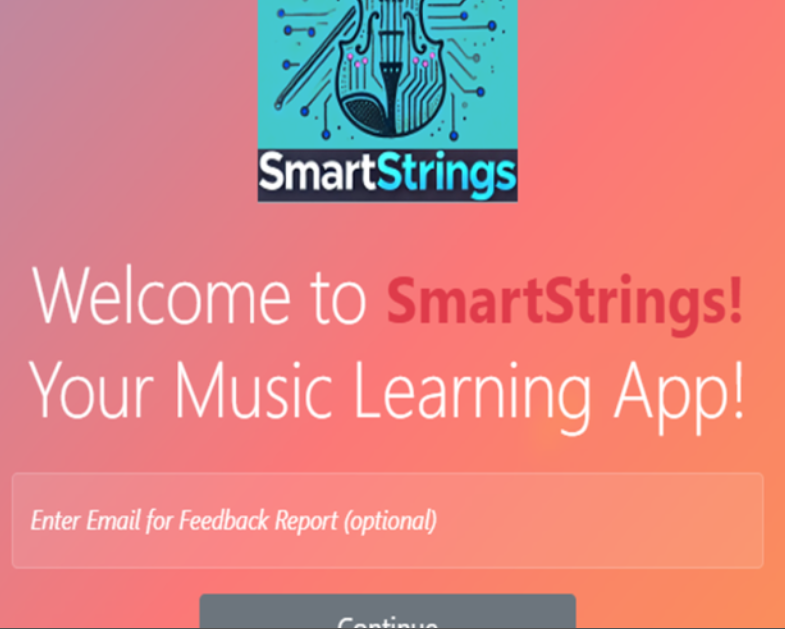
SmartStrings music-learning application welcome screen

Technical toolkit

What I use to move from idea to evidence.

My projects combine software, intelligent systems, physical computing, and controlled evaluation.

01

Software

  • Python
  • Web application development
  • Algorithm design
02

AI & perception

  • Machine learning and neural networks
  • Computer vision and 3D landmark tracking
  • Audio and speech analysis
03

Adaptive systems

  • Multimodal fusion
  • Retrieval-augmented generation
  • Agentic orchestration and generative AI
04

Hardware & validation

  • Arduino and biometric sensors
  • Haptic feedback
  • Controlled experiments and statistical analysis

02 / Research

Build. Test. Learn. Repeat.

A prototype is a beginning. I use controlled experiments and data analysis to learn whether an idea actually works, for whom, and why.

03 / Measured impact

Building matters most when the work reaches people.

I track participation, learning, and access—not only awards—to understand whether my work is moving beyond a prototype.

250+HARMONI sessions delivered
108participants in controlled research
80+high-school researchers mentored
40+middle-school club participants
31K+TeenSTEMentor views

04 / Responsible design

Helpful technology has to earn trust.

Personalization can introduce bias, privacy risks, and unsafe outputs. I treat those risks as engineering requirements, not an afterthought.

01

Test for bias

Audit representation and compare error rates across language, skin tone, disability, and accessibility groups instead of relying on overall accuracy.

02

Protect privacy

Use meaningful consent, optional inputs, minimal data collection, secure processing, and deletion when sensitive information is no longer needed.

03

Design for safety

Use crisis-language detection, strict guardrails, adversarial testing, and escalation when a mental-health system encounters potentially harmful situations.

04

Keep humans in control

Support—not replace—professional judgment. When signals conflict or confidence is low, the system should ask, pause, or defer rather than pretend certainty.

05 / Sharing the spark

Technology becomes more powerful when more people can create it.

Anusha Arora delivering her TEDx talk on accessible mental-health technology TEDx · Ideas beyond the labSpeaking about the human problem behind the technology.Watch the talk ↗

06 / Internships

Learning alongside researchers and engineers.

Three experiences connecting classroom knowledge with research, development, and real-world problem solving.

01

Internship

Details coming soon

02

Internship

Details coming soon

03

Internship

Details coming soon

07 / Recognition & media

Milestones that opened the next question.

Anusha Arora holding her Regeneron ISEF 2026 awards
Regeneron ISEF 2026First Award in Technology Enhances the Arts and the F. Thomson Leighton & Bonnie Berger Family Prize for STEM Excellence.

Selected coverage

Reporting and community recognition of my work in accessible mental-health technology.